
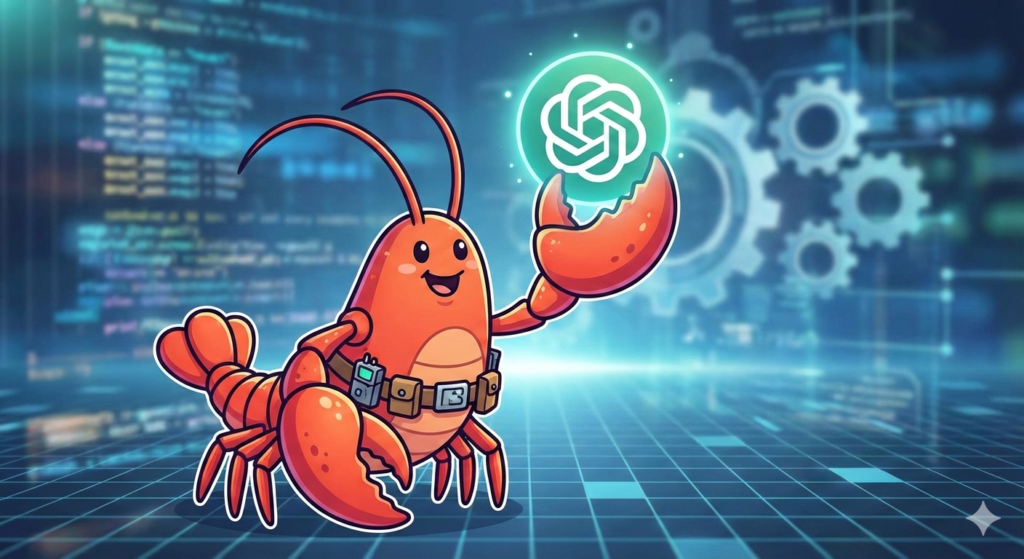
So, big news in the AI world this week. Peter Steinberger, the guy who single-handedly built the viral OpenClaw project, has officially joined OpenAI. If you’re wondering why this is a big deal, it’s because it feels like a massive turning point for the whole industry. We’re moving from an era of “chatbots that can talk about anything” to “agents that can actually get stuff done.”
Steinberger’s OpenClaw project was a sensation not because it used some secret, super-powerful new AI model, but because it solved a problem that’s been annoying all of us. It could connect different apps and perform tasks across them. Think of it like a digital intern that can handle things like “find a time everyone is free on Slack, book the meeting in Google Calendar, and send out the invites” without getting confused. That’s the “last mile” problem of AI, and Steinberger cracked it.
By bringing him on board, OpenAI is sending a clear message. They’re pivoting from pure research to focusing on making their products reliable and useful in the real world. Steinberger is a veteran of “boring” engineering, the kind that makes sure software works perfectly every single time. That’s exactly the mindset needed to build personal AI agents that we can trust to handle our private data and schedules without making embarrassing mistakes.
This brings us to the big debate of 2026. Are we seeing a plateau in AI capabilities? It might feel like it since we aren’t seeing the same mind-blowing jumps in raw intelligence benchmarks that we saw a couple of years ago. But I don’t think it’s a plateau in smarts. It’s more like a shift in focus.
Instead of just trying to make the models better at taking tests, the industry is now obsessed with making them better at doing jobs. OpenAI has even called 2026 the “Year of Practical Adoption.” The goal isn’t a model that can pass the Bar Exam anymore. It’s a model that can operate your computer as competently as a human. It’s about the infrastructure catching up to the intelligence.
Think about it. A model doesn’t need to be 10 times smarter if it can use a tool like Steinberger’s “agentic loop.” This allows it to plan a task, execute it step-by-step, check its own work, and correct any errors along the way. That’s way more valuable in a day-to-day sense than just raw computational power.
The fact that one guy could build something like OpenClaw in just a few months and get it to rival the output of giant research labs is pretty incredible. It shows that we’re entering a new phase where clever individuals can build the connective tissue that links these powerful AI models to our actual lives. Steinberger himself said that teaming up with OpenAI is the fastest way to get this kind of useful technology into everyone’s hands.
So, are we at a plateau? Maybe in one sense. But in terms of AI actually becoming a useful part of our daily lives, I think things are just getting started. The infrastructure is finally catching up, and with people like Steinberger leading the charge, the next generation of AI is going to be a lot more than just a clever chatbot. It’s going to be an agent that gets things done.